
By Rob Smith
When Diego Armando Maradona arrived in Italy in the summer of 1984, Serie A was home to many of the finest players in the world. Juventus, Inter and Milan reflected the financial strength of the North. Napoli had history, passion and an enormous support, but they had never been Italian champions. Maradona changed the scope of what seemed possible.
Napoli won their first Scudetto in 1987, lifted the UEFA Cup two years later and became champions again in 1990. Those trophies explain part of the story, but not the depth of the bond that formed between player and city. Naples did not simply celebrate Maradona. It made him part of itself.
Each weekend, the San Paolo filled with supporters waiting to see what Diego might invent. A free kick, a dribble through a packed defence, a pass nobody else had imagined. Watching him became an event in itself. Something unexpected always seemed possible. That feeling did not vanish when he left Italy in 1991. Nor did his ability to create a similar atmosphere elsewhere.
It was something I encountered repeatedly while researching my book, Echoes from a God: Diego Maradona, the Manager and His Post Playing Life. His coaching career was uneven and rarely conventional. He managed Mandiyú and Racing Club in Argentina, led his country at the 2010 World Cup, worked in the United Arab Emirates, coached in Mexico and eventually returned home with Gimnasia y Esgrima La Plata. He never reproduced in the dugout what he had achieved as a player, although expecting that was hardly reasonable. What remained was his presence.
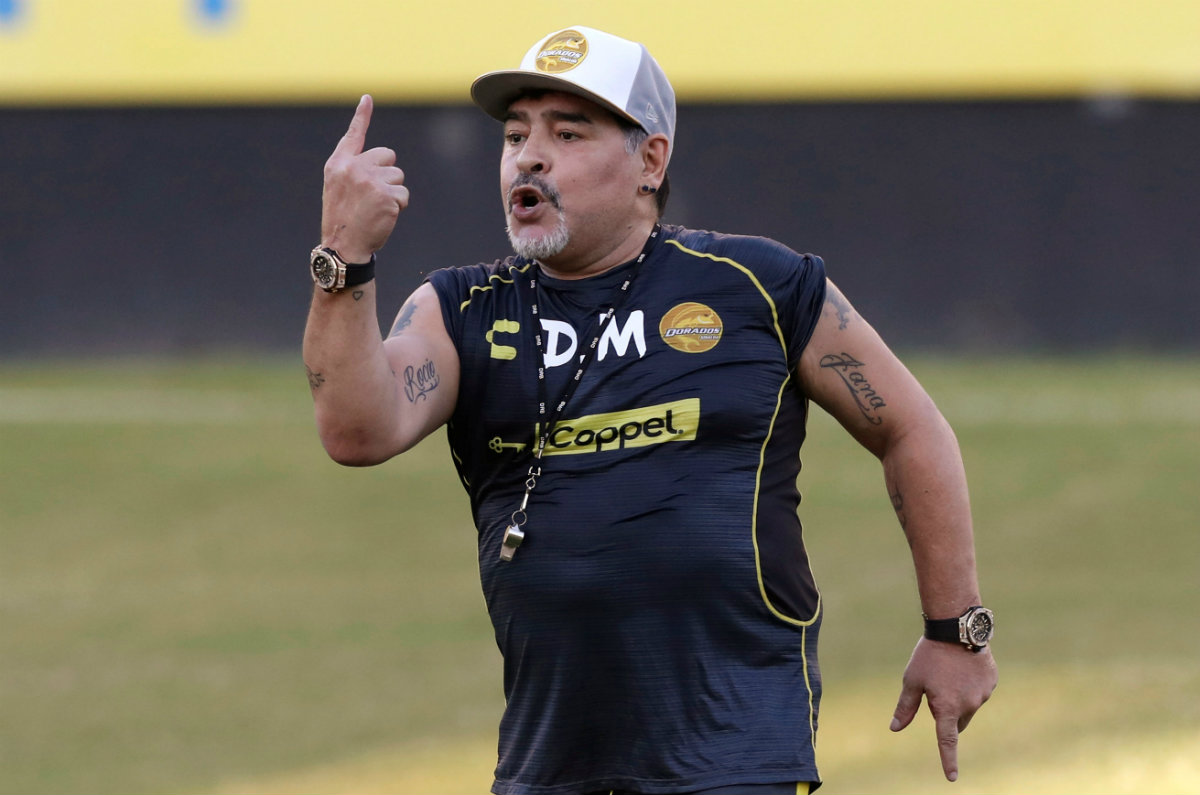
Maradona could walk into a dressing room decades later and transform its mood. Players who had grown up with stories of Mexico 1986, Napoli or Boca Juniors suddenly found him standing in front of them. Few periods showed that effect more clearly than his time with Dorados de Sinaloa.

When Maradona arrived in Mexico in 2018, Dorados were in the country’s second division. Culiacán seemed an unlikely destination for one of football’s most recognisable figures. Internationally, the city was associated more with drug cartels than football, while baseball enjoyed greater local prominence. His appointment altered the attention around the club almost immediately. The players were captivated.
Their reaction had something familiar about it. In Naples, supporters once crowded into the San Paolo knowing they might witness a moment they would talk about for years. In Sinaloa, the circumstances were completely different, yet the anticipation felt similar. This was not merely another coach arriving to take training. It was Diego Maradona.
Several squad members had been born after his final appearance for Argentina. They knew him from family stories and old footage. Suddenly, he was learning their names, giving instructions and speaking to them face to face.
Maradona understood the effect he could have on footballers. His qualities as a manager were seldom based on elaborate tactical systems or detailed positional structures. He was more persuasive as a motivator. He could make players feel trusted and capable of more than they had believed.
Dorados became one of the clearest examples. A struggling second tier side reached consecutive promotion finals under him. They failed to reach Liga MX on both occasions, but his spell in Sinaloa still stands among the more successful periods of his coaching life.
There was, in that relationship, a distant echo of Naples. During his playing years, Maradona had given Napoli supporters belief that they could challenge clubs with greater wealth and stronger institutions. Games against Juventus could carry a significance beyond football, often framed through the old tensions between North and South, Turin and Naples, establishment and outsider.
Later in life, he remained drawn towards clubs that could see themselves in similar terms. Dorados were hardly Real Madrid or Manchester United, although while in Mexico he famously suggested that if United ever wanted a coach, he was available. Gimnasia appealed to the same side of his character. Despite his fame, he retained an attachment to teams that felt ignored, underestimated or forced to fight larger powers.
His managerial career also contained obvious failures. Argentina were beaten 4 – 0 by Germany at the 2010 World Cup. Several jobs ended quickly. His health and personal problems repeatedly complicated his later years. Yet none of that erased the reaction he could still provoke by appearing at a stadium, training ground or team hotel. Nowhere was that bond more lasting than Naples.
The city followed his second life while regarding him as one of its own. His face remained on walls, shrines and shopfronts. The number ten carried a significance beyond a shirt number. Children born years after his final Napoli appearance grew up surrounded by stories of what he had done. Whenever he returned, he was not treated as a former player making a sentimental visit. He was greeted as someone coming home.

After his death in November 2020, the stadium once named after St. Paul became the Stadio Diego Armando Maradona. Across Naples, supporters gathered beneath murals and left flowers, shirts, scarves and candles. The scenes were extraordinary, but they were not the sudden revival of an old attachment. The devotion had never disappeared. The trophies explain how the relationship began. The decades that followed explain its permanence.
For the rest of his life, whether he was coaching Argentina at a World Cup, standing on a training pitch in Sinaloa or sitting on a throne on the touchline in La Plata, Maradona retained the ability to make people look towards him. Players listened differently. Crowds reacted before he had done anything at all. A room could change simply because he had entered it. The footballer had retired but Diego, the God, never really did.
Echoes from a God, Diego Maradona, the Manager and His Post Playing Life by Rob Smith is available now at all good bookshops.
