
Federico Farcomeni charts the demise of Rome’s historic Stadio Flaminio. You can follow Federico’s weekly updates from the Curva on his Calcio Express substack.
Picture this – helicopters are hovering above the stadium and 3,000 para-military style police have been deployed for the occasion. There are 3,000 Lazio fans in the “away end” which means there is literally one agent for every single one of them! The well-to-do area surrounding the stadium is completely under siege.
It’s 19 November 1989. Local authorities have decided to raise levels of security around the derby which was also being broadcast live on national television in order to prevent further chaos. There are no more than 22,000 in attendance, 10,000 seats having been kept empty to keep the two rival sets of fans apart. A World Cup is just around the corner and Italy can’t afford any negative publicity in the build up. The message is clear – everything is under control and not even Rome’s notorious derby will be allowed to spoil things.
That derby was the first to be played at Stadio Flaminio in forty years and – needless to say – it passed without incident.
Not just calcio
But how about you picture this too?
It’s the 5th February 2000 and the Italian national rugby team hosts Scotland, the winners of the last ever Five Nations Champions to the vibrant sound of the bagpipes. This is the Azzurri’s debut in the brand new Six Nations Championship and, with the game drawing to a close, Italy are winning 27-13. Giampiero De Carli, Rome born-and-bred, even manages to score the first try in the newly reorganised tournament.
But the whole rugby environment was still so immature that the marching band embarrassingly kept playing their instruments as they left the pitch and the Maori All Blacks kept waiting and waiting before performing their traditional Haka in 2004.
In May 2010, the late sprinter and Inter fan Pietro Mennea (world record holder for 17 years), met José Mourinho and his team as they prepared for their Coppa Italia final in the midst of their historic Treble chase.
This ground recorded epic music moments too. U2 made nearby windows crack during their Joshua Tree Tour in 1987, but also Michael Jackson, Prince and David Bowie amazed fans during their respective concerts at Stadio Flaminio.
For the first time in history, Italian singer Claudio Baglioni performed on a stage set up in midfield in 1991. These are just some of the iconic moments that this historical ground has witnessed over the years.
Closed until further notice
The Stadio Flaminio has now been locked up for nearly 15 years, stuck in the middle of a power struggle between Rome’s mayor and Lazio’s president (and senator) Claudio Lotito.
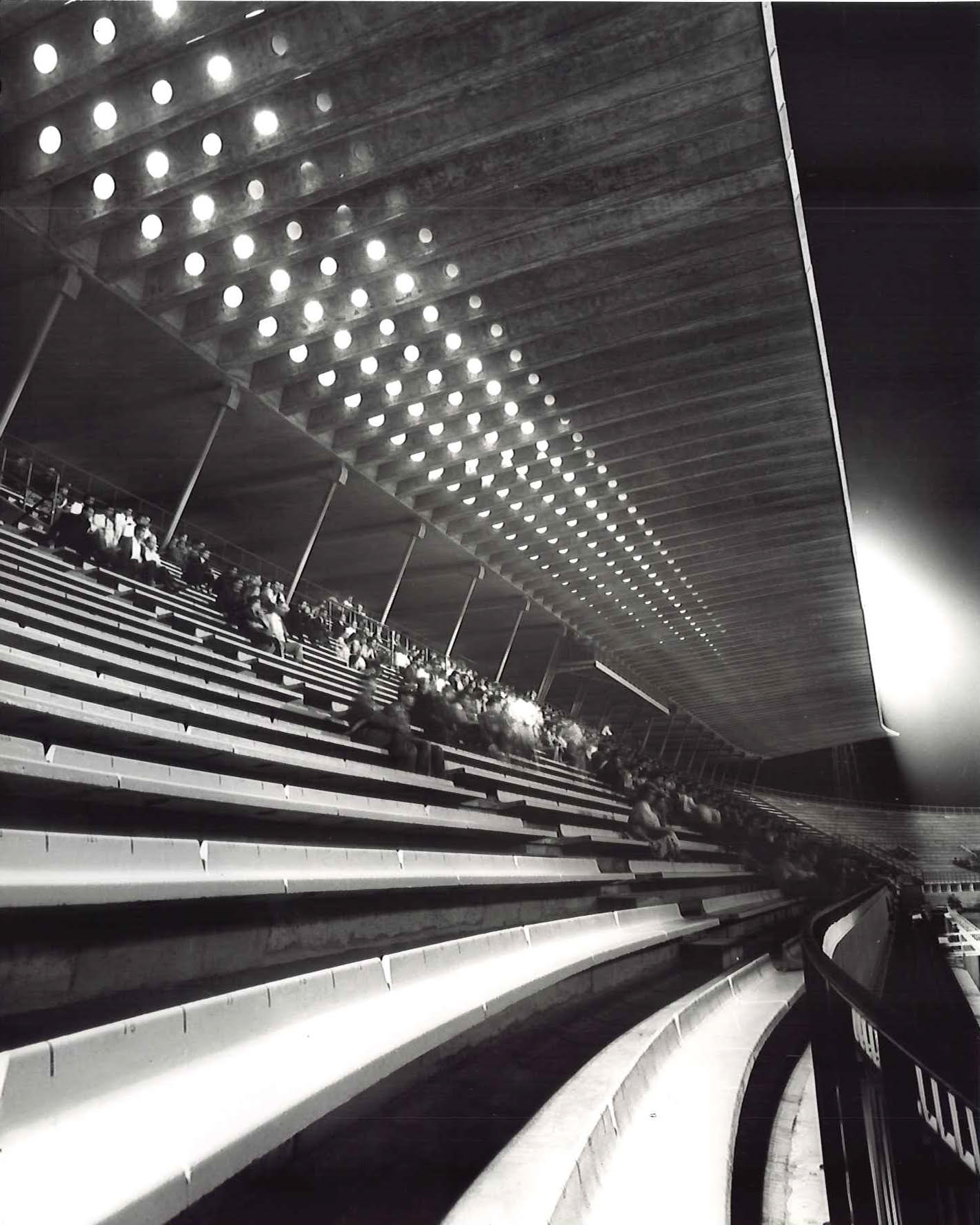
Opened in 1957, Stadio Flaminio was originally built to host the 1960 Summer Olympics. Designed by the Italian architects Pier Luigi and Antonio Nervi, it was one of the key structures built for the Games (right next to the Olympic Village), serving as a venue for various sports.
Its capacity of around 30,000 seats (initially 55,000) made it a versatile venue, suitable for a range of sports and events. The intimate setting of Flaminio, with its proximity to the pitch, created an atmosphere that many football fans cherish. It was a place where rivalries were born and where historic goals were scored. It is the place where Claudio Ranieri’s Blues (funded by Roman Abramovich’s millions) lost to Roberto Mancini’s Lazio in a July 2003 friendly. The stadium’s modest size compared to the more imposing Stadio Olimpico meant that games at Flaminio felt more intense and direct, forging a deep bond between the players and the fans.
A crumbling relic
If you happen to visit the wreck now, flora and rust have taken over the famous ground. There are a couple of families living in caravans near the gates. Terraces appear eroded. The whole surrounding area resembles an open-air dump with garbage dumped everywhere.
It’s crazy to think the abandoned stadium sits just a mile away from the heart of Rome. It’s not even signposted on Google Maps anymore. Nowadays, it’s hard to imagine that in the 1920s the “sporting tram” took thousands of Lazio fans to the Rondinella, as the previous ground built in the area was then known. On the same site as the Flaminio, the National Stadium had been built in 1911 to celebrate the 50th anniversary of Italy’s unification. The U-Form Athens-inspired ground then changed shape ahead of the 1934 World Cup, as a fourth stand replaced the four imposing honorary columns (representing Earth, Water, Air and Fire). The World Cup Final between Italy and Czechoslovakia was even played here!
More than just a stadium
Beyond its sporting significance, Stadio Flaminio holds an important place in the urban landscape of Rome. Located in the Flaminio neighbourhood (but formally administered by the posh Parioli district nearby), one of the city’s most historic and vibrant areas, the stadium is embedded in the cultural fabric of the city. Flaminio is a neighbourhood known for its artistic and architectural heritage, and the stadium itself reflects this history.
The stadium is situated near other important landmarks, including the MAXXI National Museum of 21st Century Arts, the Music Auditorium and the Villa Borghese gardens, creating a unique blend of culture and sport. As such, it is not just a venue for athletic competition but a gathering place that ties together Rome’s rich historical and modern influences.
Its close proximity to the heart of the city could make it a vital part of the community, providing a venue for both international events and local cultural celebrations. The surrounding area, with its mix of residential buildings, shops, and cultural institutions, contributes to the stadium’s character, making it an integral part of the daily life of the neighbourhood.
Foreign investment?
In November 2025, news spread that the Qatar Investment Authority was ready to pour money into an urban redevelopment of the area. The subject matter is so sensitive that, when local journalist Stefano Greco announced that he was ready to publish a document that proved that no formal approach had been made with the City of Rome to obtain permission for Lazio to use the stadium, he had the local Carabinieri banging on his door the following morning to seize his laptop and mobile phones.
Even as the stadium sits dormant, the memories of historic games and iconic performances linger, preserving Flaminio’s place in Rome’s sporting heritage.
In recent years, various discussions have been held about its future – whether it will be revitalised or repurposed for other purposes.
Even before rugby’s swansong in 2011 (Italy 22-21 France), plans had been submitted to bring its capacity up to 42,000. Then, the findings of a sepulchral mausoleum dating back to the 1st century B.C. prevented any further excavations from proceeding.
As it’s often the case in Rome, archaeological restrictions have been holding this place in the past, but will anyone eventually be able to take it into the future?
Words by Federico Farcomeni
You can follow Federico’s weekly updates from the Curva on his Calcio Express substack.