
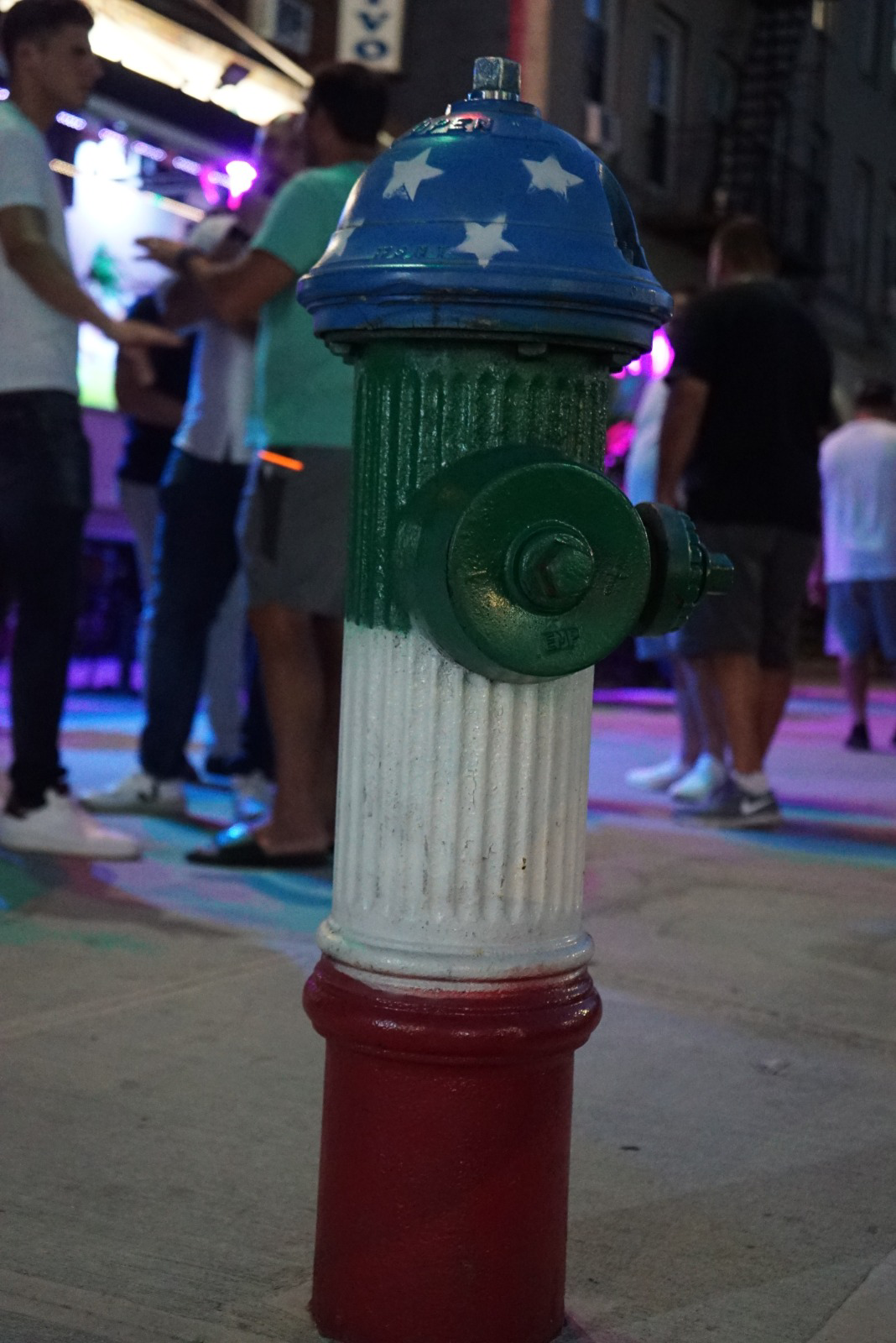
Italian Culture in Brooklyn
The smell of zeppole permeates the thick night air on 18th Avenue in Brooklyn, New York. Young and old, Italian and not, have come to celebrate the Feast of Santa Rosalia for the 51st time, making Bensonhurst more of a weekend destination than a neighborhood. It’s one that actually began in and honors the patron saint of Palermo — where many of the area’s residents originate — over 400 years ago, which ties history, culture, and the Italian diaspora between the Old World, and the New.
But beyond the technicolor lights of carnival rides and hot pepper sausage sandwiches that provide instant gratification in exchange for midnight indigestion, is a serious football tournament that celebrates the local community and brings it together under one flag.
What began in the 1970s for local small businesses to play together — the cafes, butcher shops, barbers, tile stores, seamstresses, etc. — started with just six teams. It developed into something much greater. Eventually, it showcased semi-pro and even ex-professional players from around New York City, as well as Pennsylvania, Florida, South America, and even competitors from Italy.

It hasn’t always been so easy as just flicking the remote to watch soccer in the United States — let alone Italian football. When the tournament first started, there was no cable TV, and no matches on regular television. If you wanted to see a game, you had to go to the Walker Theatre on 65th Street, buy a ticket, and watch it on the big screen — just like going to the movies today or, better yet, streaming on a phone.

The Games Begin
The first tournament was held in 1976, the U.S. Bicentennial year. By the time the 1982 World Cup rolled around, the tournament was drawing players flown in from Europe and former NASL stars, like Ferdi De Matthaeis and Machia from the New York Arrows, one of the best players in U.S. soccer history. Teams from as far away as Queens joined in, and it became a summer showcase for elite talent.
Some of the founding figures included FIFA international referee Giovanni Di Salvatore (from Torre del Greco, who officiated many matches at Yankee and Giants Stadium), “Il Cavaliere” Liparulli, Angelo Vinciguerra, Sal Rapaglia, and later, Tony Noto — who became the backbone of the event. A Palermo native from Capaci, Tony used the tournament for scouting while coaching.
The original teams were Caffè MilleLuci, Mazzola Bakery, Centrale Tile, Abbondanza, and others — sponsored by local icons like Trunzo Brothers. The Caleps, a legendary local Italian band still performing today, were also tied to the event, making it as much a community celebration as a soccer competition.
Now with about 100 players competing with different divisions spanning from open to an over-40 side, matches are played just outside of Coney Island in 7-a-side style. Known for its competitive nature, college players used it as a preseason warm-up, though many had to “sneak” into the tournament because NCAA rules at the time forbade them from playing outside college.
Through the years, many big names have drawn national interest including prominent figures like U.S. Men’s National Team alumni (Carlos Llamosa, Mike Windishmann, Carlos Jaguande), in addition to Giovanni Savarese who scored 41 goals for the MetroStars, including the club’s first goal in history. Famous manager Chris Armas and even Giorgio Chinaglia have been special guests, along with notable local coaches and figures like the late Joe Barone, and Franco Paonessa.
Even celebrities like Steve Nash, former NBA star and head coach for the Brooklyn Nets, have joined as guest players.

The Human Story
Anthony Catanzaro, a Bensonhurst native, has been deeply involved — first as a spectator, then player, and now organizer. He played in the tournament at age 14 in 1982 and has since worked to preserve its competitive spirit and community essence. He sees the tournament as more than a game, but a celebration of community, where competition, friendship, heritage, and local pride come together. Catanzaro notes it’s “tangible instead of watching something on TV,” making for an immersive and emotionally resonant experience.
Peter Curto of Supra Soccer Agency now works diligently with a few close colleagues to preserve the Italian roots and ensure the tournament’s growth in the region. He sees the competition as the backbone to Brooklyn’s regional soccer outreach:
“Today, the tournament continues to honor its rich history while embracing the future, serving as a powerful example of how soccer unites people and builds community, especially as the sport grows in the U.S. and the World Cup approaches; making it a tradition worth celebrating for generations to come.”
This tournament is a vibrant blend of sport, tradition, and neighborhood spirit. It keeps alive a slice of Brooklyn’s rich Italian-American heritage — and continues to evolve by welcoming new generations and talent. What this showcases is just how hungry the Italian-American community was for soccer — a piece of the sport they loved from back home.
